
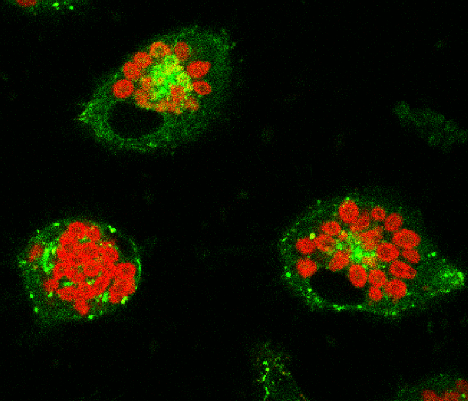
Host–Pathogen Interactions, Bacterial Persistence, and Therapeutic Discovery
The Rijal Lab investigates how bacterial pathogens—particularly Mycobacterium tuberculosis—survive within host immune cells and withstand antimicrobial pressure. We combine genetic perturbation, live-cell imaging, multi-omic profiling, chemical biology, and BSL-3 infection models to define mechanisms of immune-cell permissiveness, antibiotic tolerance, and bacterial persistence.
01
Research
Immune control of intracellular bacteria, antibiotic tolerance, and therapeutic discovery.
The Rijal Lab
Experimental Systems for Intracellular Infection Biology
We use bacterial genetics, cell biology, high-content imaging, and biochemical and multi-omic approaches to move from phenotype to mechanism. Our work spans molecular assays, macrophage infection models, and BSL-2, BSL-3, and ABSL-3 containment.
Research Focus
What We Study
Host Defense & Intracellular Survival
How M. tuberculosis survives within macrophages and how host defenses determine whether engulfed bacteria are eliminated or persist.
Antibiotic Tolerance & Persistence
How M. tuberculosis survives antimicrobial pressure through stress-induced, non-genetic persistence—and how these survival states can be therapeutically disrupted.
Chemical Biology & Therapeutic Discovery
Identifying bacterial vulnerabilities and repurposed compounds that can improve control of M. tuberculosis in cell-based and BSL-3 infection models.
Lab Updates
Latest News
Stay up to date with publications, conferences, and lab announcements.
-
New Paper Accepted in G3: Genes|Genomes|Genetics
Congratulations to Anushka Tennakoon and the team on their latest publication.Our research article, “Identification of novel inhibitors of Mycobacterium smegmatis growth through genome-wide overexpression of Cluster P3 mycobacteriophage Xavia genes,” has been officially accepted for publication in G3: Genes|Genomes|Genetics.
-
Marshall Puckett joins the Rijal Lab as Undergraduate honors student
Marshall Puckett joined the Rijal Lab as undergraduate honors student and will conduct research for his honors thesis. His projects focus on how Mycobacterium tuberculosis uses polyphosphate (polyP) to modulate macrophage behavior and how host polyP-responsive pathways can be targeted to counter this effect.
-
Review article published in Frontiers in Immunology
July 27, 2026 Ramesh Rijal and Alexandre F. Marques published a review on how phosphorylation shapes MHC antigen presentation, immune recognition, and translational opportunities in cancer, vaccination, and infectious disease. Read the article →
Interested in joining the lab?
We welcome curious postdocs, graduate students, and undergraduates. If that sounds like you, get in touch.

